Warm Spring days bring the carpenter ants out of hibernation in CT. Schedule your Pest Inspection today. Longer days lead to increased heating of ant nests and soon worker ants can be seen foraging. The first carpenter ants seen are usually sluggish, and headed towards moisture sources. Since carpenter ants feed on honey dew and insects that they either capture or find, natural food sources are rare in Spring. Moisture sources such as sinks, showers, bathtubs, toilets, and water leaks offer a drink of water after a long winter. Some foods like wet cat food, soda cans, sugar, or grease may also serve as a quick source of energy until their natural food sources awaken outdoors.
Once trees and shrubs start to produce new leaves and flower buds the associated insects that feed on them show up. Aphids, inchworms, scales, mealy bugs, whiteflies and a host of others all serve as dinner for the hungry carpenter ants. Rotting fruit, or dead animals may also provide sugars and protein for a carpenter ant colony. Carpenter ant nests located outside generally take longer to wake up in CT. Ants seen inside a house early in Spring usually means that the colony is living somewhere within. Typical nest locations include but are not limited to: exterior columns, steps, decks or porches; roof rafters, joists, and sheathing; roof trim and siding; interior walls and ceilings; hollow doors, door and window frames; sills, joists, and sub floors.
Damage from carpenter ants can be extensive, and may be accompanied by some type of moisture problem. Carpenter ants excavate channels or galleries used for living space within wooden members. Over time these galleries may become quite large and complex. Frass, a mixture of small wood chips, fecal material, and dead insect parts, may be ejected from the nest site. Large piles of frass indicate an active carpenter ant colony. Freshly produced frass will appear light in color and may be thrown directly out of the nest or transported by worker ants to another location and dumped. Pest control operators can tell a lot from frass and its location. Carpenter ant colonies may contain more than 3000 workers. Peak population levels are reached within 3 to 6 years if conditions are favorable. Once a carpenter ant colony becomes mature it will produce reproductives in the form of winged male and female ant swarms.
All workers in the carpenter ant colony are sterile females of various sizes depending on the caste. Smaller workers care for eggs and larvae, while larger workers forage for food, do construction, or perform defensive duties around the nest. The single mated queen carpenter ant controls the colony through pheromones and may live more than 15 years. Smaller wasp like male ants are produced only to mate and die during the swarm. The presence of winged ants inside a home usually indicates that the nest is inside. Swarming carpenter ants are attracted to light, and need to escape into the world to mate and start a new colony. This behavior sends them to sunny windows, and also attracts them to houses at night.
Door lamps, spot lights, and interior lights viewed from outside will attract swarming carpenter ants to the house at night in Connecticut. Warm nights in May, June, and July promote carpenter ant swarming. Large numbers of large black winged ants can be seen all over lawns and in spider webs. Food for birds, mice, and other insects, some will survive to create a new carpenter ant colony.
After mating the queen carpenter ant will chew off her wings at the shoulder or thorax. Close examination of the queen carpenter ant will reveal wing remnants left attached to the thorax. These queen ants are large, and the abdomen filled with eggs and reproductive organs. When squished, white custard like material will come out of the abdomen. Mated queen carpenter ants seek shelter and a place to lay the first eggs of the new colony.
Stumps, rotten wood, damp areas easily excavated usually fit the bill. One stump I examined contained more than 9 separate starter colonies, complete with eggs and small workers. Places with rot or other moisture issues in and around the home will also serve the queen carpenter ant well. New carpenter ant colonies contain small numbers of workers and may not be noticed for several years until a swarm takes place. Several swarms may take place during the summer months. The presence of single queens, with or without wings, dead near doors or in spider webs near lights does not necessarily mean that a nest is inside the house, but does indicate a nest somewhere nearby.
Queen ants are fairly good fliers and spread out from the nest during swarming events in an effort to get away from the mother colony. This behavior is thought to decrease pressure on the mother colony while increasing the chances of forming a new colony, spreading the carpenter ant genes. Over the life of a carpenter ant colony many thousands of swarmers are produced, each one a potential new colony in the making. With odds like that, you can bet on carpenter ants to be around in CT for a long time, and they have been.v
Call to scheule your Pest Inspection today! 888-558-1574
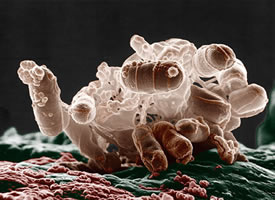 Coliform and E.Coli Bacteria in Your Well water. Bacteria exist in many Connecticut well waters, especially shallow or poorly constructed wells under the influence of water from the surface. However even if your